We live in an era of accelerating change, when
scientific and technological advancements are arriving rapidly. As a
result, we are developing a new language to describe our civilization as
it evolves. Here are 20 terms and concepts that you’ll need to navigate
our future.
Back in 2007 I put together a list of terms every self-respecting futurist should be familiar with.
But now, some seven years later, it’s time for an update. I reached out
to several futurists, asking them which terms or phrases have emerged
or gained relevance since that time. These forward-looking thinkers
provided me with some fascinating and provocative suggestions — some
familiar to me, others completely new, and some a refinement of earlier
conceptions. Here are their submissions.
1. Co-veillance
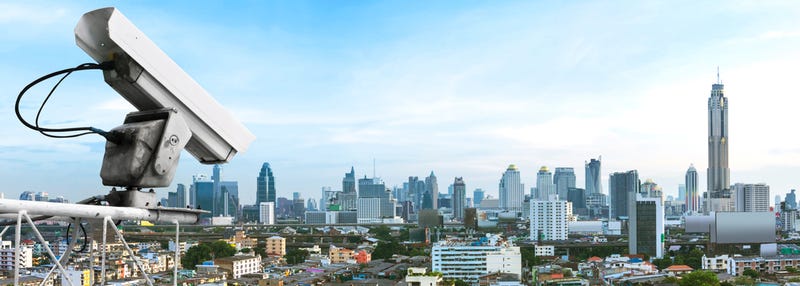
Futurist and scifi novelist David Brin suggested this one. It’s kind of a mash-up between Steve Mann’s sousveillance and Jamais Cascio’s Participatory Panopticon, and a furtherance of his own Transparent Society
concept. Brin describes it as: “reciprocal vision and supervision,
combining surveillance with aggressively effective sousveillance.” He
says it’s “scrutiny from below.” As Brin told io9:
Folks are rightfully worried about surveillance powers
that expand every day. Cameras grow quicker, better, smaller, more
numerous and mobile at a rate much faster than Moore’s Law (i.e. Brin’s corollary).
Liberals foresee Big Brother arising from an oligarchy and faceless
corporations, while conservatives fret that Orwellian masters will take
over from academia and faceless bureaucrats. Which fear has some
validity? All of the above. While millions take Orwell’s warning
seriously, the normal reflex is to whine: “Stoplooking at us!” It cannot
work. But what if, instead of whining, we all looked back? Countering
surveillance with aggressively effective sousveillance — or scrutiny
from below? Say by having citizen-access cameras in the camera control
rooms, letting us watch the watchers?
Brin says that reciprocal vision and supervision will be hard to
enact and establish, but that it has one advantage over “don’t look at
us” laws, namely that it actually has a chance of working. (Image
credit: 24Novembers/Shutterstock)
2. Multiplex Parenting
This particular meme — suggested to me by the Institute for the Future’s Distinguished Fellow Jamais Cascio — has only recently hit the radar. “It’s in-vitro fertilization,” he says, “but with a germline-genetic mod twist.” Recently sanctioned by the UK, this is the biotechnological advance where a baby can have three genetic parents
via sperm, egg, and (separately) mitochondria. It’s meant as a way to
flush-out debilitating genetic diseases. But it could also be used for
the practice of human trait selection, or so-called “designer babies”.
The procedure is currently being reviewed for use in the United States. The era of multiplex parents has all but arrived.
3. Technological Unemployment
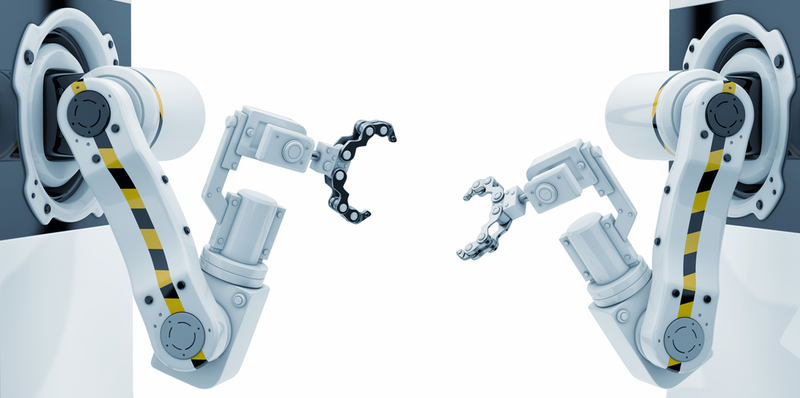
Futurist and scifi novelist Ramez Naam
says we should be aware of the potential for “technological
unemployment.” He describes it as unemployment created by the deployment
of technology that can replace human labor. As he told io9,
For example, the potential unemployment of taxi drivers,
truck drivers, and so on created by self-driving cars. The phenomenon is
an old one, dating back for centuries, and spurred the original Luddite
movement, as Ned Ludd is said to have destroyed knitting frames for
fear that they would replace human weavers. Technological unemployment
in the past has been clearly outpaced (in the long term) by the creation
of new wealth from automation and the opening of new job niches for
humans, higher in levels of abstraction. The question in the modern age
is whether the higher-than-ever speed of such displacement of humans can
be matched by the pace of humans developing new skills, and/or by
changes in social systems to spread the wealth created.
Indeed, the potential for robotics and AI to replace workers of all
stripes is significant, leading to worries of massive rates of
unemployment and subsequent social upheaval. These concerns have given
rise to another must-know term that could serve as a potential antidote:
guaranteed minimum income. (Image credit: Ociacia/Shutterstock)
4. Substrate-Autonomous Person
In the future, people won’t be confined to their meatspace bodies.
This is what futurist and transhumanist Natasha Vita-More describes as
the “Substrate-Autonomous Person.” Eventually, she says, people will be
able to form identities in numerous substrates, such as using a
“platform diverse body” (a future body that is wearable/usable in the
physical/material world — but also exists in computational environments
and virtual systems) to route their identity across the biosphere, cybersphere, and virtual environments.
“This person would form identities,” she told me. “But they would
consider their personhood, or sense of identity, to be associated with
the environment rather than one exclusive body.” Depending on the
platform, the substrate-autonomous person would upload and download into
a form or shape (body) that conforms to the environment. So, for a
biospheric environment, the person would use a biological body, for the
Metaverse, a person would use an avatar, and for virtual reality, the
person would use a digital form.
5. Intelligence Explosion
It’s time to retire the term ‘Technological Singularity.’ The reason, says the Future of Humanity Institute’s
Stuart Armstrong, is that it has accumulated far too much baggage,
including quasi-religious connotations. It’s not a good description of
what might happen when artificial intelligence matches and then exceeds
human capacities, he says. What’s more, different people interpret it
differently, and it only describes a limited aspect of much broader
concept. In its place, Armstrong says we should use a term devised by
the computer scientist I. J. Good back in 1967: the “Intelligence explosion.”
It describes the apparent sudden increase in the
intelligence of an artificial system such as an AI. There are several
scenarios for this: it could be that the system radically self improves
itself, finding that as it becomes more intelligent, it’s easier for it
to become more intelligent still. But it could also be that human
intelligence clusters pretty close in mindspace, so a slowly improving
AI could shoot rapidly across the distance that separates the village
idiot from Einstein. Or it could just be that there are strong skill
returns to intelligence, so that an entity need only be slightly more
intelligent that humans to become vastly more powerful. In all cases,
the fate of life on Earth is likely to be shaped mainly by such “super-intelligences”.
6. Longevity Dividend
While many futurists extol radical life extension on humanitarian
grounds, few consider the astounding fiscal benefits that are to be had
through the advent of anti-aging biotechnologies. The Longevity
Dividend, as suggested to me by bioethicist James Hughes of the IEET, is
the “assertion by biogerontologists that the savings to society of
extending healthy life expectancy with therapies that slow the aging
process would far exceed the cost of developing and providing them, or
of providing additional years of old age assistance.” Longer healthy
life expectancy would reduce medical and nursing expenditures, argues
Hughes, while allowing more seniors to remain independent and in the
labor force. No doubt, the corporate race to prolong life is heating up in recognition of the tremendous amounts of money to be made — and saved — through preventative medicines.
7. Repressive Desublimation
This concept was suggested by our very own Annalee Newitz, editor-in-chief of io9 and author ofScatter, Adapt And Remember.
The idea of repressive desublimation was first developed by by
political philosopher Herbert Marcuse in his groundbreaking book Eros and Civilization. Newitz says:
It refers to the kind of soft authoritarianism preferred
by wealthy, consumer culture societies that want to repress political
dissent. In such societies, pop culture encourages people to desublimate
or express their desires, whether those are for sex, drugs or violent
video games. At the same time, they’re discouraged from questioning
corporate and government authorities. As a result, people feel as if
they live in a free society even though they may be under constant
surveillance and forced to work at mind-numbing jobs. Basically,
consumerism and so-called liberal values distract people from social
repression.
8. Intelligence Amplification
Sometimes referred to as IA, this is a specific subset of human enhancement — the augmentation of human intellectual capabilities via technology.
“It is often positioned as either a complement to or a competitor to
the creation of Artificial Intelligence,” says Ramez Naam. “In reality
there is no mutual exclusion between these technologies.” Interestingly,
Naam says IA could be a partial solution to the problem of
technological unemployment — as a way for humans, or posthumans, to
“keep up” with advancing AI and to stay in the loop.
9. Effective Altruism
This is another term suggested by Stuart Armstrong. He describes it as
the application of cost-effectiveness to charity and
other altruistic pursuits. Just as some engineering approaches can be
thousands of times more effective at solving problems than others, some
charities are thousands of time more effective than others, and some
altruistic career paths are thousands of times more effective than
others. And increased efficiency translates into many more lives saved,
many more people given better outcomes and opportunities throughout the
world. It is argued that when charity can be made more effective in this
way, it is a moral duty to do so: inefficiency is akin to letting
people die.
10. Moral Enhancement
On a somewhat related note, James Hughes says moral enhancement
is another must-know term for futurists of the 21st Century. Also known
as virtue engineering, it’s the use of drugs and wearable or implanted
devices to enhance self-control, empathy, fairness, mindfulness,
intelligence and spiritual experiences.
11. Proactionary Principle
This one comes via Max More, president and CEO of the Alcor Life
Extension Foundation. It’s an interesting and obverse take on the
precautionary principle. “Our freedom to innovate technologically is
highly valuable — even critical — to humanity,” . “This
implies several imperatives when restrictive measures are proposed:
Assess risks and opportunities according to available science, not
popular perception. Account for both the costs of the restrictions
themselves, and those of opportunities foregone. Favor measures that are
proportionate to the probability and magnitude of impacts, and that
have a high expectation value. Protect people’s freedom to experiment,
innovate, and progress.”
12. Mules
Jamais Cascio suggested this term, though he admits it’s not widely used. Mules are unexpected events — a parallel to Black Swans
— that aren’t just outside of our knowledge, but outside of our
understanding of how the world works. It’s named after Asimov’s Mule
from the Foundation series.
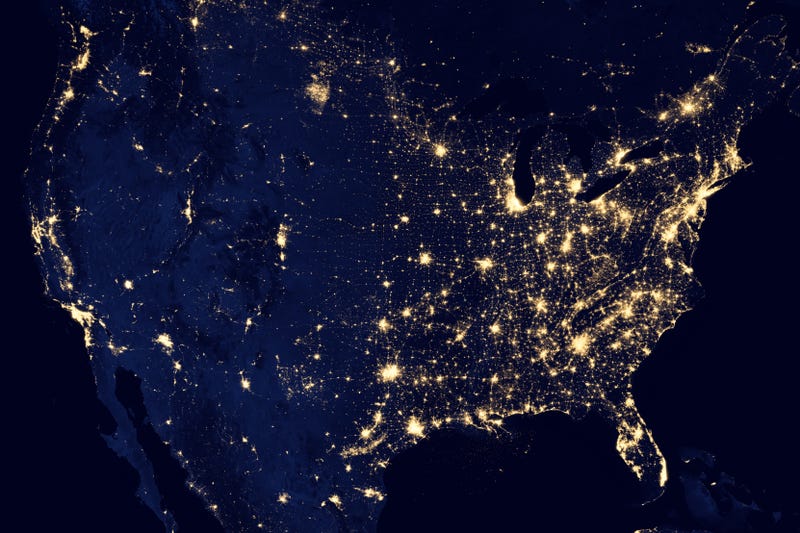
13. Anthropocene
Another must-know term submitted by Cascio, described as “the current
geologic age, characterized by substantial alterations of ecosystems
through human activity.” (Image credit: NASA/NOAA).
14. Eroom’s Law
Unlike Moore’s Law, where things are speeding up, Eroom’s Law
describes — at least in the pharmaceutical industry — things that are
slowing down (which is why it’s Moore’s Law spelled backwards). Ramez
Naam says the rate of new drugs developed per dollar spent by the
industry has dropped by roughly a factor of 100 over the last 60 years.
“Many reasons are proposed for this, including over-regulation, the
plucking of low-hanging fruit, diminishing returns of understanding more
and more complex systems, and so on,” he told io9.
15. Evolvability Risk
Natasha Vita-More describes this as the ability of a species to
produce variants more apt or powerful than those currently existing
within a species:
One way of looking at evolvability is to consider any
system — a society or culture, for example, that has evolvable
characteristics. Incidentally, it seems that today’s culture is more
emergent and mutable than physiological changes occurring in human
biology. In the course of a few thousand years, human tools, language,
and culture have evolved manifold. The use of tools within a culture has
been shaped by the culture and shows observable evolvability-from
stones to computers-while human physiology has remained nearly the same.
16. Artificial Wombs
“This is any device, whether biological or technological, that allows humans to reproduce without using a woman’s uterus,”
says Annalee Newitz. Sometimes called a “uterine replicator,” she says
these devices would liberate women from the biological difficulties of
pregnancy, and free the very act of reproduction from traditional
male-female pairings. “Artificial wombs might develop alongside social
structures that support families with more than two parents, as well as
gay marriage,” says Newitz.
They are dependent on certain (mild) assumptions on how
the brain works, and requires certain enabling technologies, such as
scanning devices to make the original brain model, good understanding of
biochemistry to run it properly, and sufficiently powerful computers to
run it in the first place. There are plausible technology paths that
could allow such emulations around 2070 or so, with some large
uncertainties. If such emulations are developed, they would
revolutionise health, society and economics. For instance, allowing
people to survive in digital form, and creating the possibility of
“copyable human capital”: skilled, trained and effective workers that
can be copied as needed to serve any business purpose.
Armstrong says this also raises great concern over wages, and over the eventual deletion of such copies.
Imagine the fantastic prospect of creating interfaces that connect
the brains of two (or more) humans. Already today, scientists have
created interfaces that allow humans to move the limb — or in this case,
the tail — of another animal. At first, these technologies will be used
for therapeutic purposes; they could be used to help people relearn how
to use previously paralyzed limbs. More radically, it could eventually
be used for recreational purposes. Humans could voluntarily couple
themselves and move each other’s body parts.
20. Computational Overhang
This refers to any situation in which new algorithms can suddenly and
dramatically exploit existing computational power far more efficiently
than before. This is likely to happen when tons of computational power
remains untapped, and when previously used algorithms were suboptimal.
This is an important concept as far as the development of AGI
(artificial general intelligence) is concerned. As noted by Less Wrong, it
signifies a situation where it becomes possible to create
AGIs that can be run using only a small fraction of the easily
available hardware resources. This could lead to an intelligence
explosion, or to a massive increase in the number of AGIs, as they could
be easily copied to run on countless computers. This could make AGIs
much more powerful than before, and present an existential risk.
Luke Muehlhauser from the Machine Intelligence Research Institute (MIRI) describes it this way:
Suppose that computing power continues to double
according to Moore’s law, but figuring out the algorithms for human-like
general intelligence proves to be fiendishly difficult. When the
software for general intelligence is finally realized, there could exist
a ‘computing overhang’: tremendous amounts of cheap computing power
available to run [AIs]. AIs could be copied across the hardware base,
causing the AI population to quickly surpass the human population.
The resurrection of Jesus from the dead is the be-all and the
end-all of the Christian faith. If Jesus didn’t rise from the dead, all
bishops, priests, and Christian ministers should go home and get honest
jobs, and all the Christian faithful should leave their churches
immediately. As Paul himself put it: “If Jesus is not raised from the
dead, our preaching is in vain and we are the most pitiable of men.”
It’s no good, of course, trying to explain the resurrection away or
rationalize it as a myth, a symbol, or an inner subjective experience.
None of that does justice to the novelty and sheer strangeness of the
Biblical message. It comes down finally to this: if Jesus was not raised
from death, Christianity is a fraud and a joke; if he did rise from
death, then Christianity is the fullness of God’s revelation, and Jesus
must be the absolute center of our lives. There is no third option.
I want to explore, very briefly, a handful of lessons that follow
from the disquieting fact of the Resurrection. First, this world is not
it. What I mean is that this world is not all that there is. We live our
lives with the reasonable assumption that the natural world as we’ve
come to know it through the sciences and discern it through common sense
is the final framework of our lives and activities. Everything (quite
literally, everything) takes place within the theater of our ordinary
experience. And one of the most powerful and frightening features of the
common-sense world is death. Every living thing dies and stays dead.
Indeed, everything in the universe, scientists tell us, comes into being
and then fades away permanently.
But what if this is not in fact the case? What if the laws of nature
are not as iron-clad as we thought? What if death and dissolution did
not have the final say? What if, through God’s power and according to
his providence, a “new heavens and a new earth” were being born? The
resurrection of Jesus from the dead shows as definitively as possible
that God is up to something greater than we had imagined or thought
possible. And therefore we don’t have to live as though death were our
master and as though nihilism were the only coherent point of view.
After he had encountered the risen Christ, Paul could even taunt death:
“Where is your sting?” In light of the resurrection, we can, in fact,
begin to see this world as a place of gestation, growth and maturation
toward something higher, more permanent, more splendid.
Here’s a second lesson derived from the resurrection: the tyrants
know that their time is up. Remember that the cross was Rome’s way of
asserting its authority. Roman authorities declared that if you run
afoul of our system, we will torture you to death in the most
excruciating (ex cruce, from the cross) way possible and then
we will leave your body to waste away be devoured by the beasts of the
field. The threat of violence is how tyrants up and down the centuries
have always asserted their authority. Might makes right. The crucified
Jesus appeared to anyone who was witnessing the awful events on Calvary
to be one more affirmation of this principle: Caesar always wins in the
end. But when Jesus was raised from the dead through the power of the
Holy Spirit, the first Christians knew that Caesar’s days were numbered.
Jesus had taken the worst that the world could throw at him and he
returned, alive and triumphant. They knew that the Lord of the world was
no longer Caesar, but rather someone whom Caesar had killed but whom
God had raised from death. This is why the risen Christ has been the
inspiration for resistance movements up and down the centuries. In our
own time we saw how deftly John Paul II wielded the power of the cross
in Communist Poland. Though he had no nuclear weapons or tanks or mighty
armies, John Paul had the power of the resurrection, and that proved
strong enough to bring down one of the most imposing empires in the
history of the world. Once again, the faculty lounge interpretation of
resurrection as a subjective event or a mere symbol is exactly what the
tyrants of the world want, for it poses no real threat to them.
The third great lesson of the resurrection is that the path of
salvation has been opened to everyone. Paul told us that “though he was
in the form of God, Jesus did not deem equality with God something to be
grasped. Rather he emptied himself and took the form of slave…accepting
even death, death on a cross.” In a word, Jesus went all the way down,
journeying into pain, despair, alienation, even godforsakenness. He went
as far as you can go away from the Father. Why? In order to reach all
of those who had wandered from God. Then, in light of the resurrection,
the first Christians came to know that, even as we run as fast as we can
away from the Father, all the way to godforsakenness, we are running
into the arms of the Son. The opening up of the divine life allows
everyone free access to the divine mercy. And this is why the Lord
himself could say, “When the Son of Man is lifted up, he will draw all
people to himself,” and why Paul could assert in 1 Corinthians, “When
everything is subjected to him, then the Son himself will also be
subjected to the one who subjected everything to him, so that God may be
all in all.” The resurrection shows that Christ can gather back to the
Father everyone whom he has embraced through his suffering love.
So on Easter Sunday, let us not domesticate the still stunning and
disturbing message of resurrection. Rather, let us allow it to unnerve
us, change us, set us on fire.
Could your blood group determine your risk of major cancers, infertility and stomach ulcers, as well as diseases such as cholera and malaria?
For years, the idea that blood groups had any medical significance beyond blood transfusions was dismissed by scientists.
It hasn’t been helped by the celebrity’s favourite, the ‘blood group diet’, which claims your blood type determines how your body responds to certain food.
But a growing number of studies is revealing how our blood groups may make us more prone to lethal illnesses — or even protect us from them.
The latest research into blood types shows that having group O blood can lower your risk of heart attacks.
Researchers at Pennsylvania University discovered this benefit in a study involving 20,000 people. Their research, to be published in The Lancet, found that most people who have a gene called Adamts7 face a significantly raised risk of suffering a heart attack. But in people with blood group O who have the Adamts7, there is no raised risk.
Dr Muredach Reilly, the lead researcher, says this knowledge may help to develop new therapies for people at risk of heart attacks. Such drugs may mimic the beneficial effect of the O blood group gene.
Only 40 per cent of people in Britain know what their group is, according to the National Blood Service. But in future, we may be far more keen to learn it — and to understand its life-saving implications.
Our blood group is determined by genes inherited from our parents.
Millennia of evolution have split human blood into four types: A, B, AB and O — around 44 per cent of Britons are type O, 42 per cent are type A, 10 per cent type B and 4 per cent are AB.
What distinguishes each type are their antigens (the immune defence systems) on the surface of the red blood cells. Each blood group type evolved to provide defences against lethal diseases.
But each has its own weaknesses, too. People with type O blood are at less risk of dying from malaria than people with other blood groups. But they are more vulnerable to cholera and stomach ulcers caused by viruses and bacteria.
For a long time, the study of blood groups and disease was discredited — thanks to the Nazis.
Otto Reche, a Nazi German ‘professor of racial science’, claimed in the Thirties that pure Aryans all had blood type A.
The main ‘enemy’ blood group was, he said, B type. He used this to identify ‘inferior’ races for persecution during Hitler’s rise to power.
While such claims are scientifically absurd, in Japan there is still widespread discrimination on the grounds of blood group. In the Twenties, Japanese scientists claimed blood groups produced different personalities.
The idea became so ingrained that in World War II, the Imperial Army formed battle groups based on blood type.
The idea resurfaced in the Seventies and a rash of Japanese best-sellers has spread the belief that type As are sensitive but anxious; Type Bs are cheerful but focused; Os are outgoing but stubborn; and ABs are arty and unpredictable.
This theory has a dark side. Bura-hara (blood-group harassment) is common in Japan. Company chiefs often consider candidates’ blood types when picking staff. Children at some kindergartens are also divided by blood type. Matchmaking agencies provide blood-type compatibility tests.
Nevertheless, there is serious science behind the idea that blood groups can hold the secret to fighting deadly diseases.
In the Fifties, research at four London hospitals found the risk of developing gastric cancer was much higher for people with blood group A than for those with blood group O. But people with group O had a greater risk of peptic ulcers.
This month, those findings have been confirmed by investigators at Sweden’s Karolinska Institute, which studied more than a million people over a period of 35 years.
The lead researcher, Dr Gustaf Edgren, says people with group A may be more susceptible to gastric cancer risks such as smoking, alcohol and use of non-steroidal anti-inflammatory drugs.
Type O people may be more vulnerable to a bacterium that can cause peptic ulcers, Helicobacter pylori.
Last October, U.S. scientists showed that a woman’s blood group can affect her chances of becoming pregnant.
The study of more than 560 women undertaking fertility treatment found that those with blood type O were up to twice as likely to have a lower egg count and poorer egg quality, which could affect the chances of conceiving.
Women with blood group A seemed to be better protected against their egg counts falling over time.
Researcher Edward Nejat, from New York’s Albert Einstein College, says the exact reasons for a link between blood group and ovarian reserve was not clear.
Blood groups have been linked to other reproductive troubles. Last month, a study at Harvard University found that women with AB or B group blood havea raised risk of developing ovarian cancer.
Meanwhile, people with type O might be less at risk of cancer, but research shows they are also more vulnerable than others to norovirus, the potentially lethal vomiting and diarrhoea bug.
And men with type O might be more prone to piling on the pounds, say Danish researchers.
They have found that type O males who are exposed routinely to pollution at work have a significantly raised risk of obesity compared with men of other blood types. The researchers, at Copenhagen’s Bispebjerg University Hospital, speculate that the pollution sets off chronic inflammatory responses in the men’s bodies that can result in them becoming overweight.
It’s a good excuse anyway.
Taken overall, such a weight of medical evidence might prompt us to question why we are not told of the health threats we might face due to our blood type. But in the UK, there is little work in this field.
Professor Mike Murphy, of the NHS Blood and Transplant authority, says: ‘Our colleagues in the U.S. have become increasingly involved in this type of research, particularly in trying to harness the power of blood types to fight infectious diseases. But the interest in Britain is sparse.’
Indeed, in the United Kingdom, the highest-profile proponent of blood-type therapy is not a scientist at all; it is Cheryl Cole.
The X Factor judge is a fan of the ‘blood group diet’, which is based on the idea that different blood types process foods differently.
To lose weight, people with group A are told to follow a vegetarian diet, while group O should eat meat and shun dairy and wheat.
“It has made such a difference to how I feel and my energy levels,|” Cole said in Hello! magazine interview.
“Before, I was like “energy schmenergy” and didn’t believe it. But now I believe it 100 per cent.”
Her enthusiasm is not shared, however, by the British Dietetic Association.
A spokesman says: “Cutting out food groups is never a good idea. This diet could lead to significant deficiencies such as calcium.”
Meanwhile, a lone group of British researchers is trying to turn blood-group science into a bona-fide lifesaver in one area: malaria.
The effort is being led by Alex Rowe, an infection specialist at Edinburgh University’s School of Biological Sciences.
Her work shows that people with blood group O are resistant to the tropical disease, which kills millions every year.
Brooding and primeval, the forests of Udzungwa
seem positively enchanted: a verdant refuge of
sunshine-dappled glades enclosed by 30-metre
(100 foot) high trees, their buttresses layered with
fungi, lichens, mosses and ferns.
Udzungwa is the largest and most biodiverse of a
chain of a dozen large forest-swazthed mountains
that rise majestically from the flat coastal scrub of
eastern Tanzania. Known collectively as the Eastern
Arc Mountains, this archipelago of isolated massifs
has also been dubbed the African Galapagos for its
treasure-trove of endemic plants and animals, most
familiarly the delicate African violet.
Udzungwa alone among the ancient ranges of the
Eastern Arc has been accorded national park
status. It is also unique within Tanzania in that its
closed-canopy forest spans altitudes of 250 metres
(820 feet) to above 2,000 metres (6,560 ft) without
interruption.
Not a conventional game viewing destination,
Udzungwa is a magnet for hikers. An excellent
network of forest trails includes the popular half-
day ramble to Sanje Waterfall, which plunges 170
metres (550 feet) through a misty spray into the
forested valley below.
The more challenging two-night Mwanihana Trail
leads to the high plateau, with its panoramic views
over surrounding sugar plantations, before
ascending to Mwanihana peak, the second-highest
point in the range.
Ornithologists are attracted to Udzungwa for an
avian wealth embracing more than 400 species,
from the lovely and readily-located green-headed
oriole to more than a dozen secretive Eastern Arc
endemics.
Four bird species are peculiar to Udzungwa,
including a forest partridge first discovered in 1991
and more closely related to an Asian genus than to
any other African fowl.
Of six primate species recorded, the Iringa red
colobus and Sanje Crested Mangabey both occur
nowhere else in the world – the latter, remarkably,
remained undetected by biologists prior to 1979.
Undoubtedly, this great forest has yet to reveal all
its treasures: ongoing scientific exploration will
surely add to its diverse catalogue of endemics.
About Udzungwa Mountains National Park
Size: 1,990 sq km (770 sq miles).
Location: Five hours (350 km/215 miles) from Dar
es Salaam; 65 kms (40 miles) southwest of Mikumi.
Getting there
Drive from Dar es Salaam or Mikumi National Park.
What to do
From a two-hour hike to the waterfall to camping
safaris.
Combine with nearby Mikumi or en route to Ruaha.
When to go
Possible year round although slippery in the rains.
The dry season is June-October before the short
rains but be prepared for rain anytime.
Accommodation
Camping inside the park.
Bring all food and supplies.
Two modest but comfortable lodges with en-suite
rooms within 1km of the park entrance.
Suppose, we have a folder containing some hundred very important files and by accident someone deletes it permanently (even from the recycle bin), either by mistake or to knock you into trouble. What happens? Well, you are just doomed, that’s all. But don’t worry, because there happens to be a so called inner “trick” withWindows by which we can create an ‘undeletable’ and ‘unrenamable’ folder inside which we can place our important documents. Through this protection, you can really gain the security for your private folder. It’s a bit old one but ‘protection from deletion’, hell yeah!!
Actually, the matter in this undeletable folder is the use of keywords or ‘reserved words’. Try to make a new folder in Windows & give it names like con, aux, lpt1, lpt2, lpt3 up to lpt9. You won’t be allowed to create folder with above mentioned names, because they happen to be the reserved words in windows.
Steps to be followed :
How To Create Undeletable And Unrenamable Folders ?
Go to Start Menu=>RUN
Type cmd& press Enter (To open Command Prompt ).
If you don’t know what is Command Prompt, Check this :
Note: You cannot make this kind of a folder in C: drive if you installed windows on C: , so try it out on other drives.
Type D: or E: or F: (The drive you like except C:)and press Enter.
Type md \lpt1\\and hit Enter (md implies make directory). You may also use other words such as aux, con, lpt2, lpt3 up to lpt9instead of lpt1.
Open that folder which you chose , and now you will be able to see the folder named lpt1.
Now, try to delete that folder or rename that folder, either ways Windows will show an error message. (Like the one shown below)
How to Delete that Folder ?
It is not possible to delete that folder manually, but it is possible to delete this folder by another way mentioned below.
Open Command Prompt (cmd).
Type the name of the folder in which you created it ( if u created this type of folder in E: drive, type E:) & press enter
Typerd \lpt1\\ (rd implies remove directory)
Now, open that drive and you can see that the folder has disappeared from there, because it is removed.
It took longer than expected, but Samsung is expanding its product line to include external solid-state drives with a new line of Portable SSD T1 products.
Samsung's 250GB external SSD is priced at $179.99, a 500GB drive is $299.99, and a 1TB drive is $599.99. By comparison, a 1TB magnetic drive can be acquired for under $100.
External storage is mostly used for data backup. But demand for external drives is growing as users download and store more multimedia and programs. Storage is also limited in Chromebooks and lightweight Windows laptops and hybrids, so users have to revert to external storage to preserve files.
But Samsung's portable SSDs will be faster and more power-efficient than external hard drives, said Richard Leonarz, senior marketing manager.
SSDs are faster at reading and writing data than hard drives. SSDs also don't have spinning disks, which are prevalent in hard drives and can draw a lot of power when reading and writing data.
The Portable SSD T1 drives will connect to a PC's USB 3.0 port. The SSDs have sequential read and write speeds of 450MBps, random read speeds of 8,000 IOPS (input/output per second) and random write speeds of 21,000 IOPS.
Samsung already makes internal SSDs, which are widely used in laptops and have up to 3.2GB in storage capacity. The external SSDs are based on the same advanced 3D V-NAND technology that gives its internal SSDs speed and durability. The 3D V-NAND SSDs have storage units stacked on top of each other, much like a skyscraper, which is a more power-efficient and speedy structure compared to the planar structure used in most SSDs today.
Samsung is now taking on the likes of Seagate, Western Digital and Toshiba, which largely sell external hard drives and hybrid SSD-hard drive products.
A Google researcher has disclosed an unpatched vulnerability in Windows 8.1 after Microsoft didn't fix the problem within a 90-day window Google gave its competitor.
The disclosure of the bug on Google's security research website early this week stirred up a debate about whether outing the vulnerability was appropriate.
The bug allows low-level Windows users to become administrators in some cases, but some posters on the Google site said the company should have kept its mouth shut. Google said it was unclear if versions of the Windows OS earlier than 8.1 were affected by the bug.
"Automatically disclosing this vulnerability when a deadline is reached with absolutely zero context strikes me as incredibly irresponsible and I'd have expected a greater degree of care and maturity from a company like Google," one poster at the Google site wrote.
The vulnerability is "your average" local privilege escalation vulnerability, the same poster wrote. "That's bad and unfortunate, but it's also a fairly typical class of vulnerability, and not in the same class as those that keep people like me up at night patching servers," the poster said. "The sad reality is that these sort of vulnerabilities are a dime a dozen on Windows."
Another poster, in what may be a slight overstatement, suggested the versions of Windows affected are run by "billions" of computer users. "Exposing vulnerabilities like this has far reaching consequences," the poster wrote. "People could get hurt by this and it doesn't bring anyone closer to a solution. When an organization is as big and powerful as [Google], people working there need to think of themselves as stewards of a great power and work to be fair and regulate the harm that can come of misusing this great power when possible."
Other posters praised Google for sticking to a deadline it's had in place since it launched its Project Zero bug-tracking team last July. "No one is done any good by keeping it secret," one poster wrote. "By exposing the [vulnerability] they allow those billions who may be running vulnerable systems to be aware of the threat to their own security and take countermeasures. A patch isn't the only way to mitigate the issue. Given the nature of this vulnerability, there are other steps administrators can take to start protecting their vulnerable systems while they await a patch."
Microsoft said in a statement it is working to release a security update to the reported vulnerability. "It is important to note that for a would-be attacker to potentially exploit a system, they would first need to have valid logon credentials and be able to log on locally to a targeted machine," a spokesman said by email. "We encourage customers to keep their anti-virus software up to date, install all available security updates and enable the firewall on their computer."
Google's 90-day deadline for fixing bug is "the result of many years of careful consideration and industry-wide discussions about vulnerability remediation," the company said. "Security researchers have been using roughly the same disclosure principles for the past 13 years ... and we think that our disclosure principles need to evolve with the changing infosec ecosystem. In other words, as threats change, so should our disclosure policy."
Google will monitor the effects of its policy closely, the company added. "We want our decisions here to be data driven, and we're constantly seeking improvements that will benefit user security," the company added. "We're happy to say that initial results have shown that the majority of the bugs that we have reported under the disclosure deadline get fixed under deadline, which is a testament to the hard work of the vendors."